A Day in the Shop.

What Happened today:

  1. Hardy tool rack

  2. Blacksmithing odds & ends

  3. Beginning the tool box build

  4. Bonus sketchbook dump

Hardy Tool Rack

So, Today (actually, yesterday now) I was able to spend a few hours in the shop. I was hoping to make great stride in the work on the cooking table (2,.0). But I realized that there was a problem with my shop. In order to work on some of the projects I had been working on recently. I had acquired several more hardy tools. A hardy tool, for those not familiar with the term, is a tool that fits in the hardy hole of the anvil.

Anvil with Hardy hole and pritchpl hole.

Cut off Hardy

Bending Fork


Scrolling Jig

Guillotine Tool


There are quite a few tools that are designed to work with a hardy hole. Pictured above are just a few. The trouble with hardy tools is that they have a square bar 3 to 4 inches long protruding out the bottom. This make them hard to store. They had been being kept on a shelf with holes drilled in it for the hardy shaft to fit in. Alas, this quickly became full and the rest were just left to clutter up my workspace. Something had to be done! So, instead of working on the table I decided to make a rack for these tools. First came the design:

This would consist of 2 angled brackets mounted on the shop wall and 3 slats of oak between them. This would create 2 grooves to drop the hardy shanks in. Because simple is not quite in my vocabulary, I decided to forge a hook on the ends of the brackets.

Finished Hardy Rack

The brackets

The tools are (Somewhat) organized!

The shop.

Small Forgings.

In order to have accomplished something at the forge today ( the rack doesn’t count, it was purely for function) I went ahead and used the final heat from the forge to create the final piece of the toolbox hardware and try and forge a few nails that will hold the box together:

Start of the tool box

Started finalizing the final size of the toolbox.

After all of this, time to cut some wood:

Sketchbook Dump

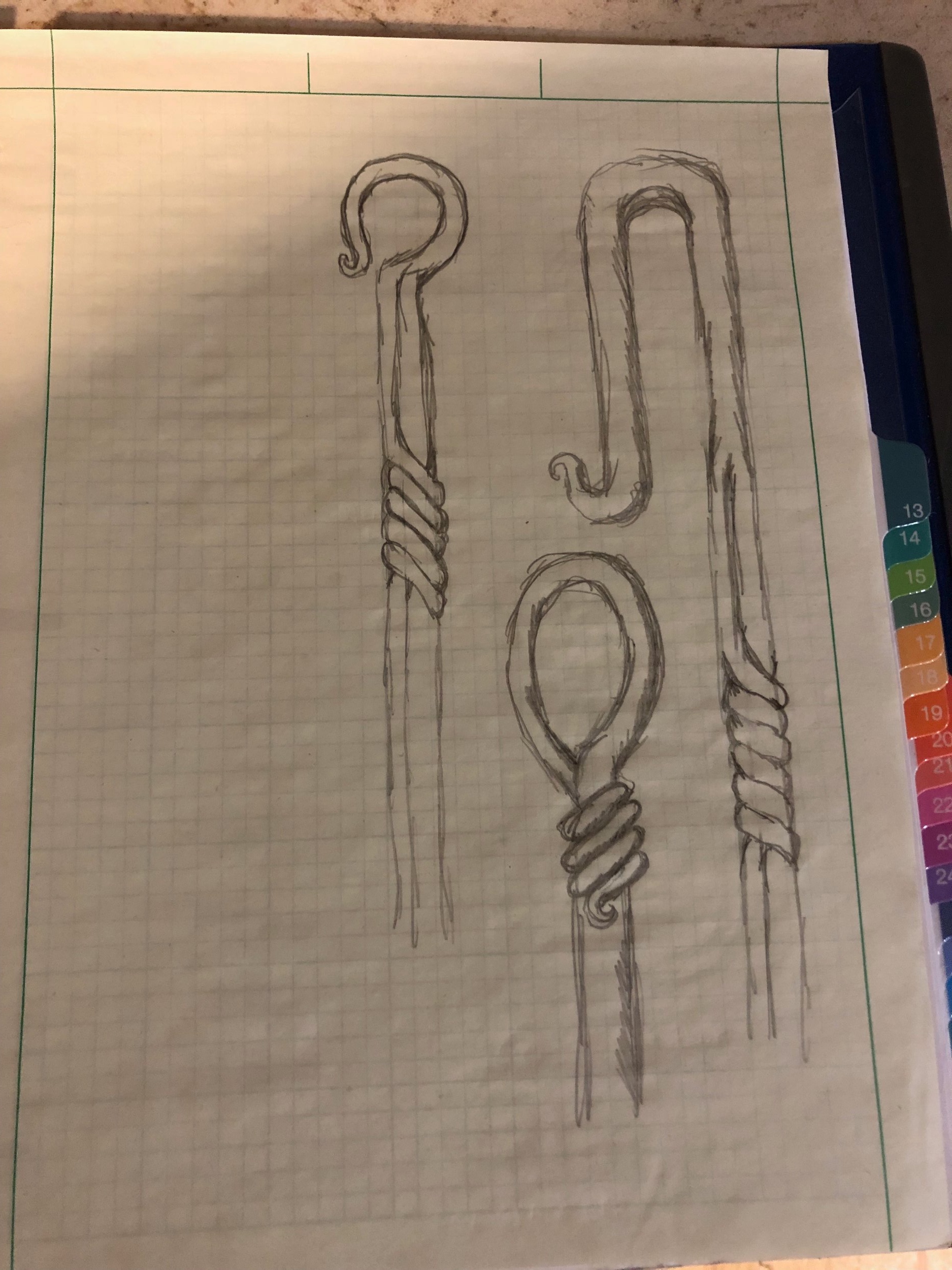
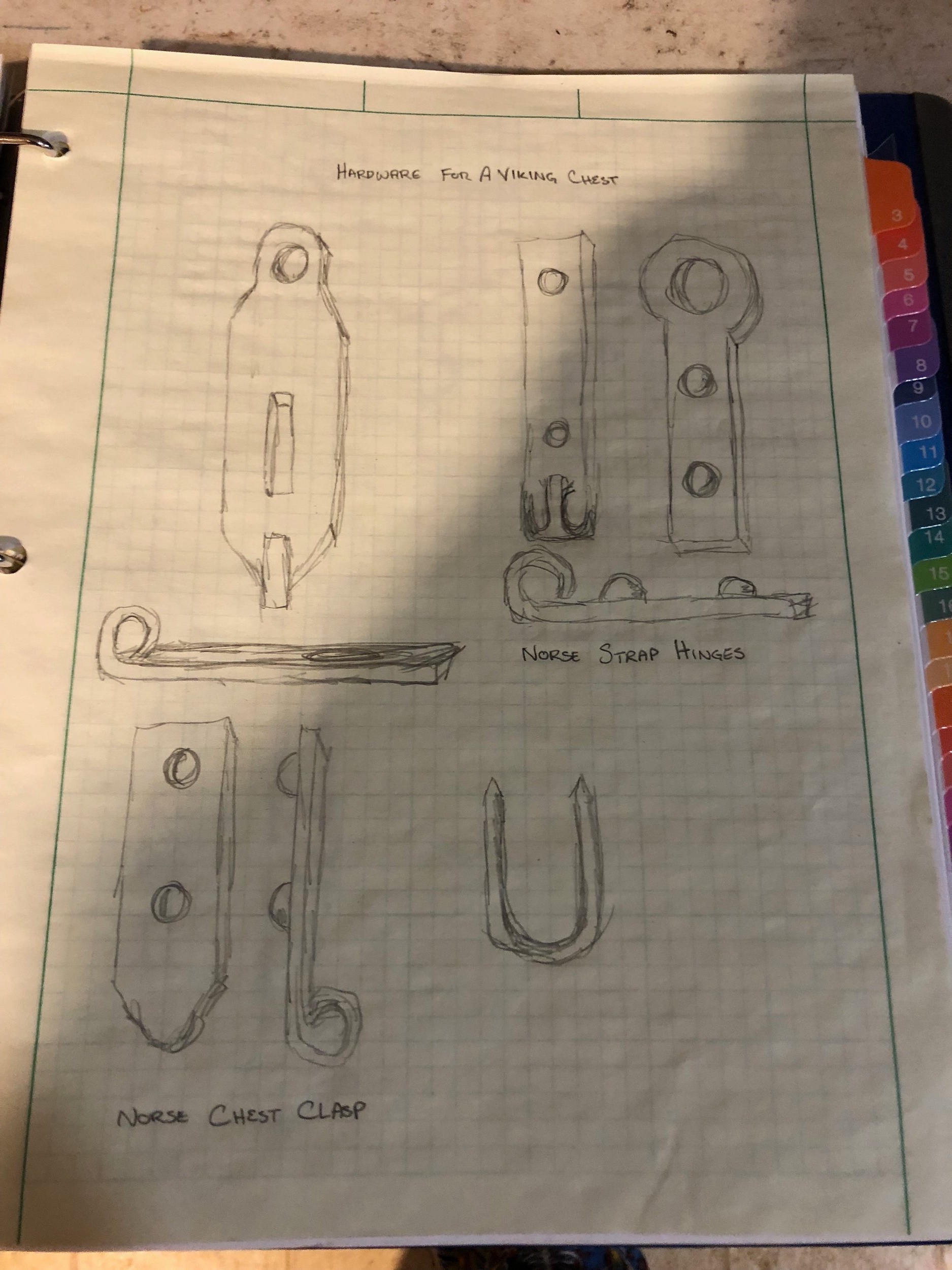
I have decided to try and rebuild my sketching skills, so here are some of my noteds and sketches for the shop:
Cooking Table 2.0: Water Dipper

The backstory:

While at Pennsic last year, My wife was using the cooking tabe (1.0) and accidentally allowed the fire to get a little to close to the wooden table supports. This caused a slight charring of the support. When my wife noticed that the fire table was actually on fire, she needed some water to put said blaze out. I had placed a large pot of water next to the cook table, but this proved very cumbersome for her to manage. Eventually she was able to put the table out and also create a fine meal as well. “Husband! we need to talk” she loudly proclaimed. Actually, she did not use the term husband, but a she did advise me to think about the way the table rests on its supports. She also put in a request for a water dipper to be used at the table. This made a lot of sense and would be easy to create. I have a water dipper at the forge that i use constantly. It is one of the first things I made in my blacksmithing class.

The work on the dipper actually began before the chest mentioned in the last update, but i have not gotten around to writing it up. My delay in writing it up came from 2 factors. First, i had not started writing these things up yet and was not sure how it would go. Secondly, because this device was in no way period. Do not get me wrong, I am sure there are several example of water dippers in period illustrations, however, The method of producing mine has a distinct modern approach to construction.


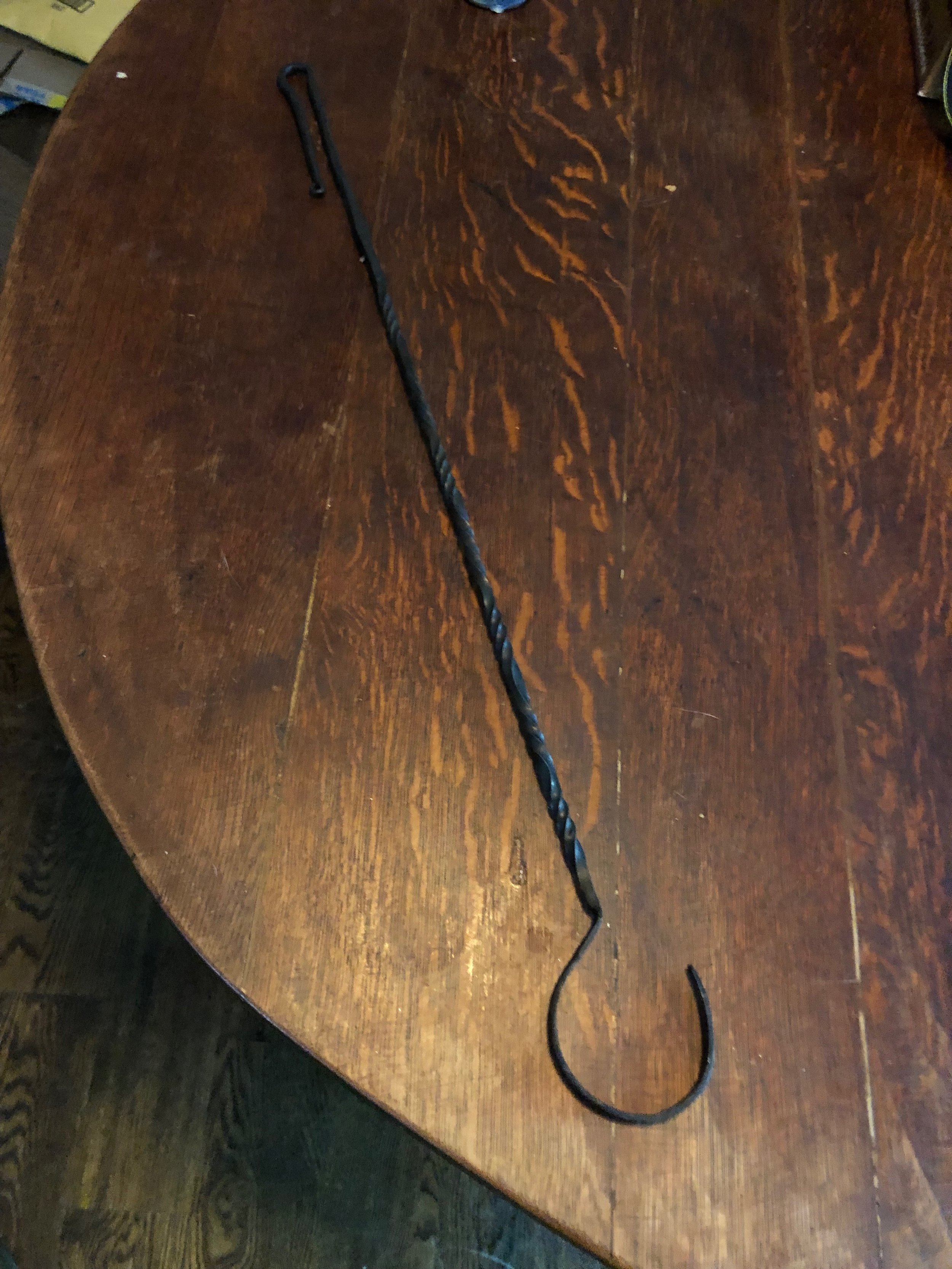
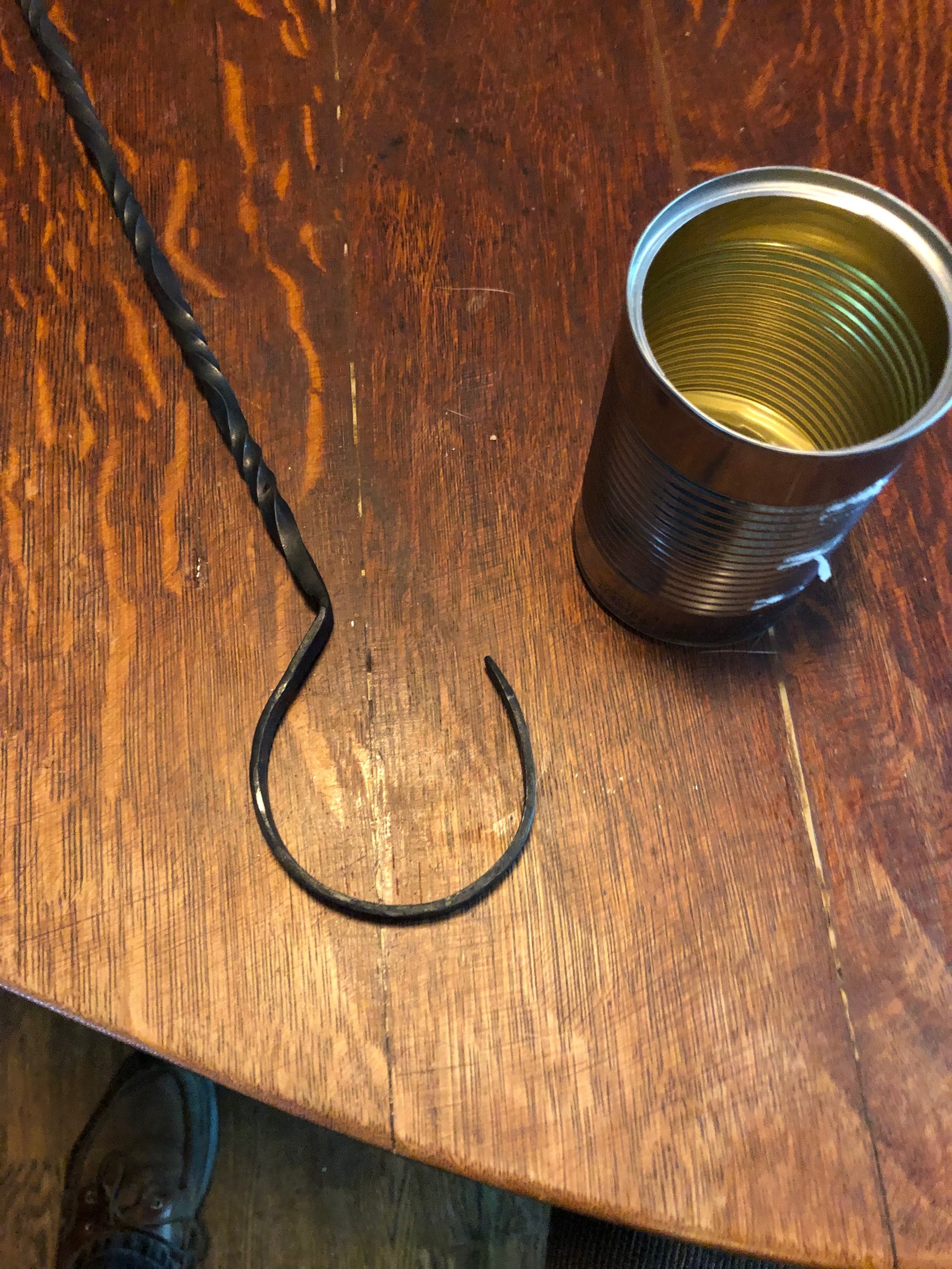
This is a tin can dipper. The forge work was to take a 3/8 in square stock and create a hanging handle on one end and a flat ring on the other. The twists were added purely for decoration. This serves as a source of water for fire control and if the can rusts out (which it will), it can be replaced and we are back in business.

One of the big advantages of having this done early in the Table 2.0 process is that it is one of the longest tools to be made for the cooking table. This means that i can use this as a measurement for the viking chest which i hope to get back to soon.

Cooking Table 2.0: The Journey begins with a Viking Chest

What Journey?

So, at Pennsic this year, I created a cooking table for the cooks of Grimmsfield and beyond to try period cooking on. The table was a success, although I was not happy with the way it came out. Sevweral cooks used it with great success. From them I received quite a bit of feedback on what worked and what did not as far as both the table and the associated fire pit. This made me decide that I needed to rebuild the whole thing and create more and better tools for using on it. In order to create all that I want for the table, I am going to start now on the creation of the tools and new table. I hope to have a kitchen I can be proud of by next Pennsic.

Where to begin?

On looking over the notes from the various cooks and the notes I made, there are several tools and pieces of equipment needed for the kitchen. In order to keep track of all of this, a storage device of some kind was needed. In fitting with the period of the table, i decided to make a chest based on the Mastermyr Find and other chests found in Scandinavia. This would be the place to store all of the tools and hardware when not at Pennsic, plus I wanted to add a rack attachment to hang the tools during use.


Start of the Chest, The Hardware

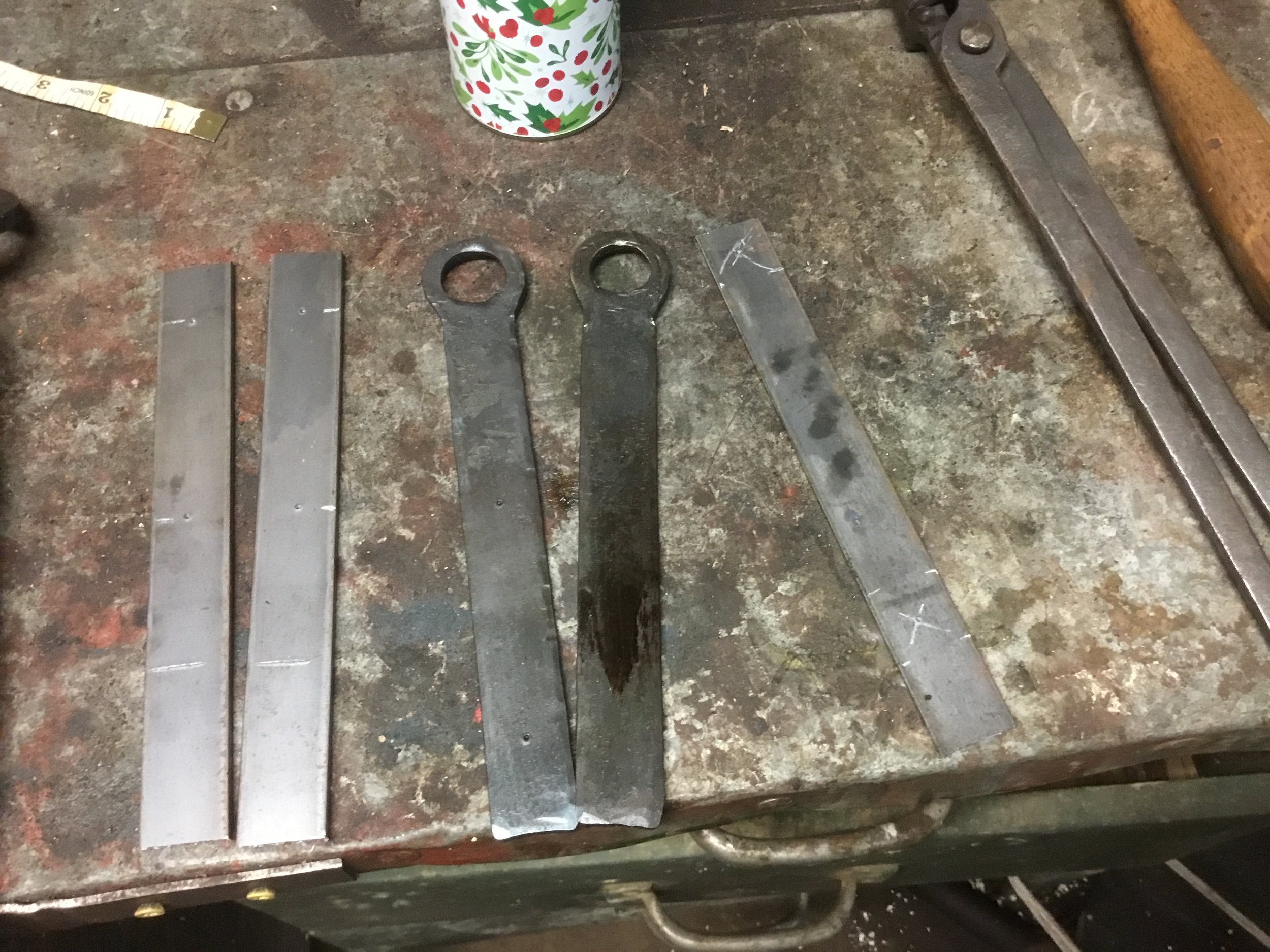
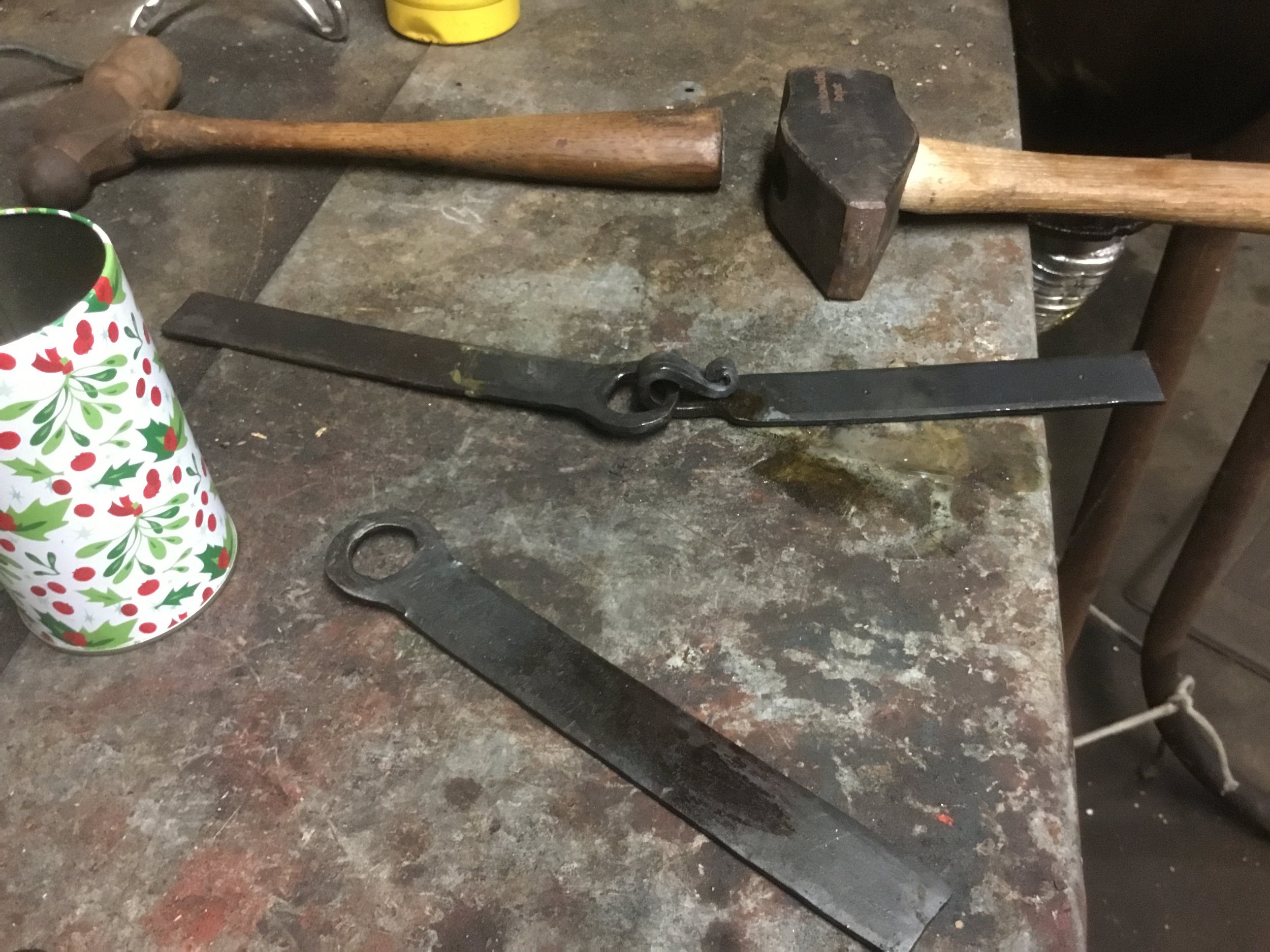
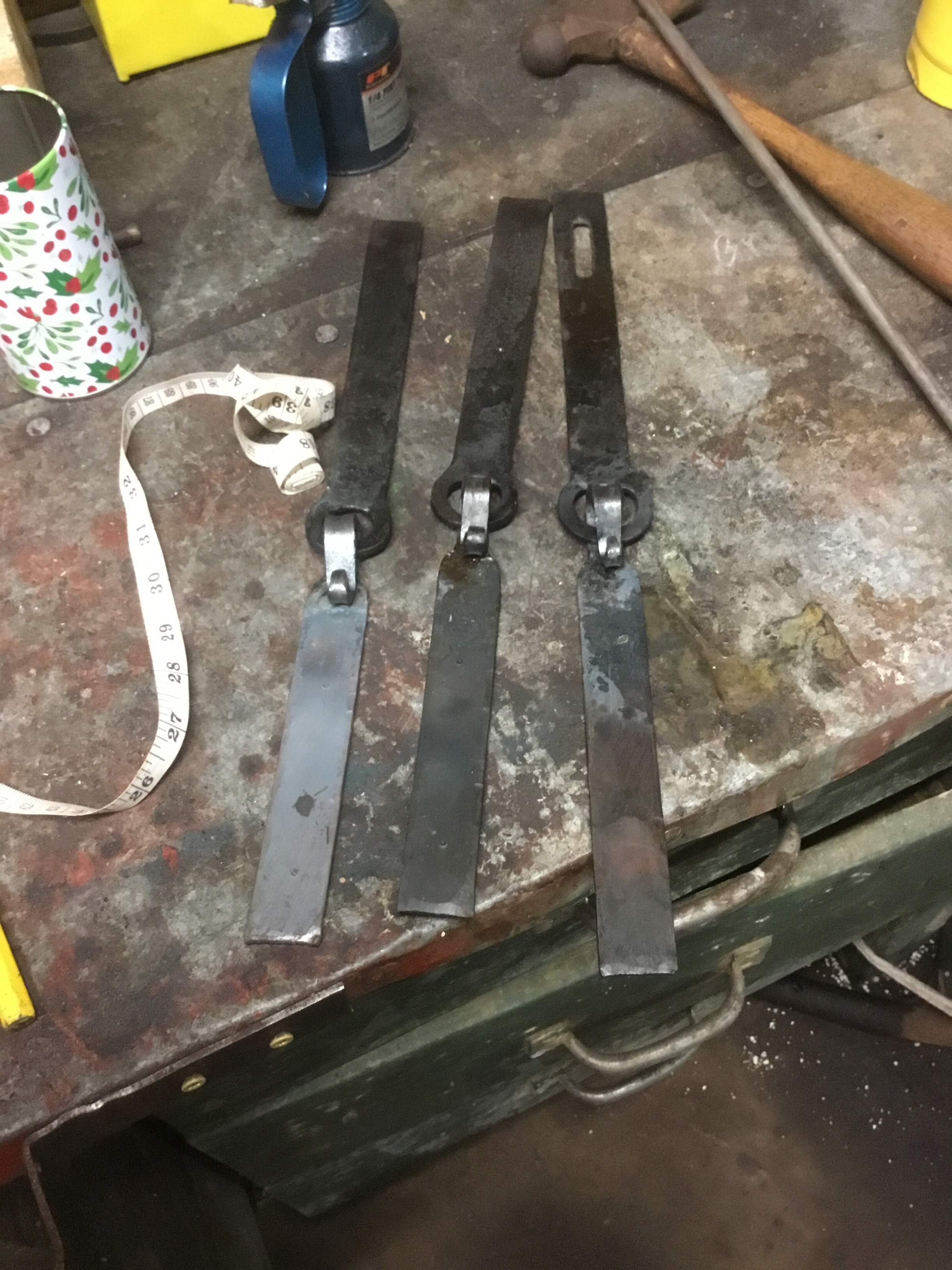
The first steps in making the chest would be to forge the hardware. This would include the hinges and the lock plate. This started with a 48 inch piece of 1 x 1/8 inch piece of cold rolled steel. This was cut into 6 8 inch pieces.


Each hinge would be made of 2 pieces of this stock and the clasp would also take 2 pieces. These were then marked for all the work that would be done to them. 3 would be made with an open loop on the end that would receive the other half. Two would have a hole drifted in the end a would complete the hinge and 1 would have a hole drifted on one side and a hole for the clasp on the other.


And now to forge!


The only thing left is to drill the holes and then on to the woodworking.